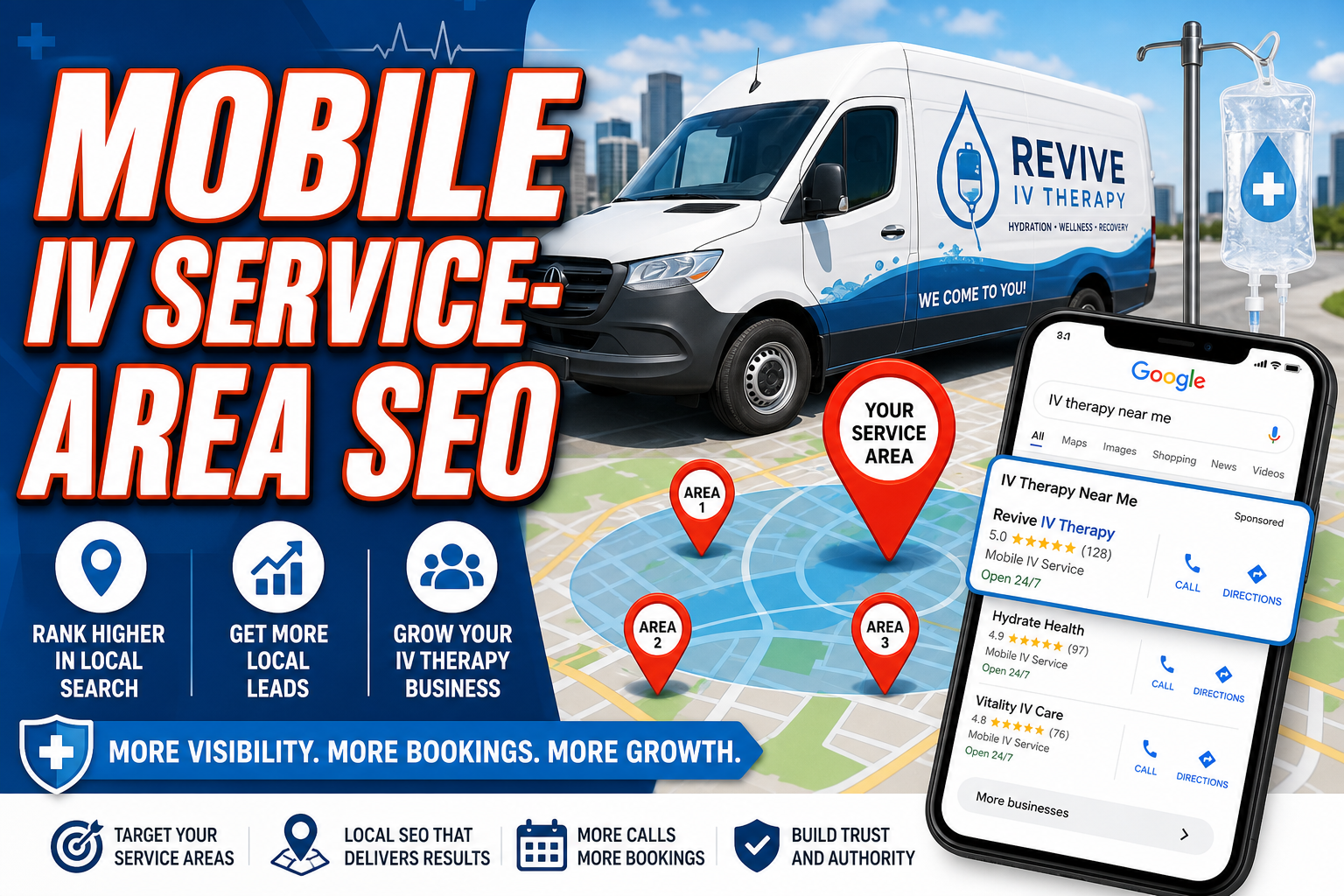
Quick answer: Mobile IV services rank in 2026 by building service‑area pages that look like real local landing pages—clear offer, proof, FAQs, and a fast booking flow—then wiring internal links so Google understands the primary “hire-us” path. One generic “we serve everywhere” page rarely ranks.
This guide shows how to structure pages for mobile IV services without spammy city stuffing.
1) What is a service‑area page (and when you need it)?
A service‑area page is a location landing page for a mobile provider that serves a geographic area (neighborhoods, suburbs, cities) without necessarily listing a public clinic address.
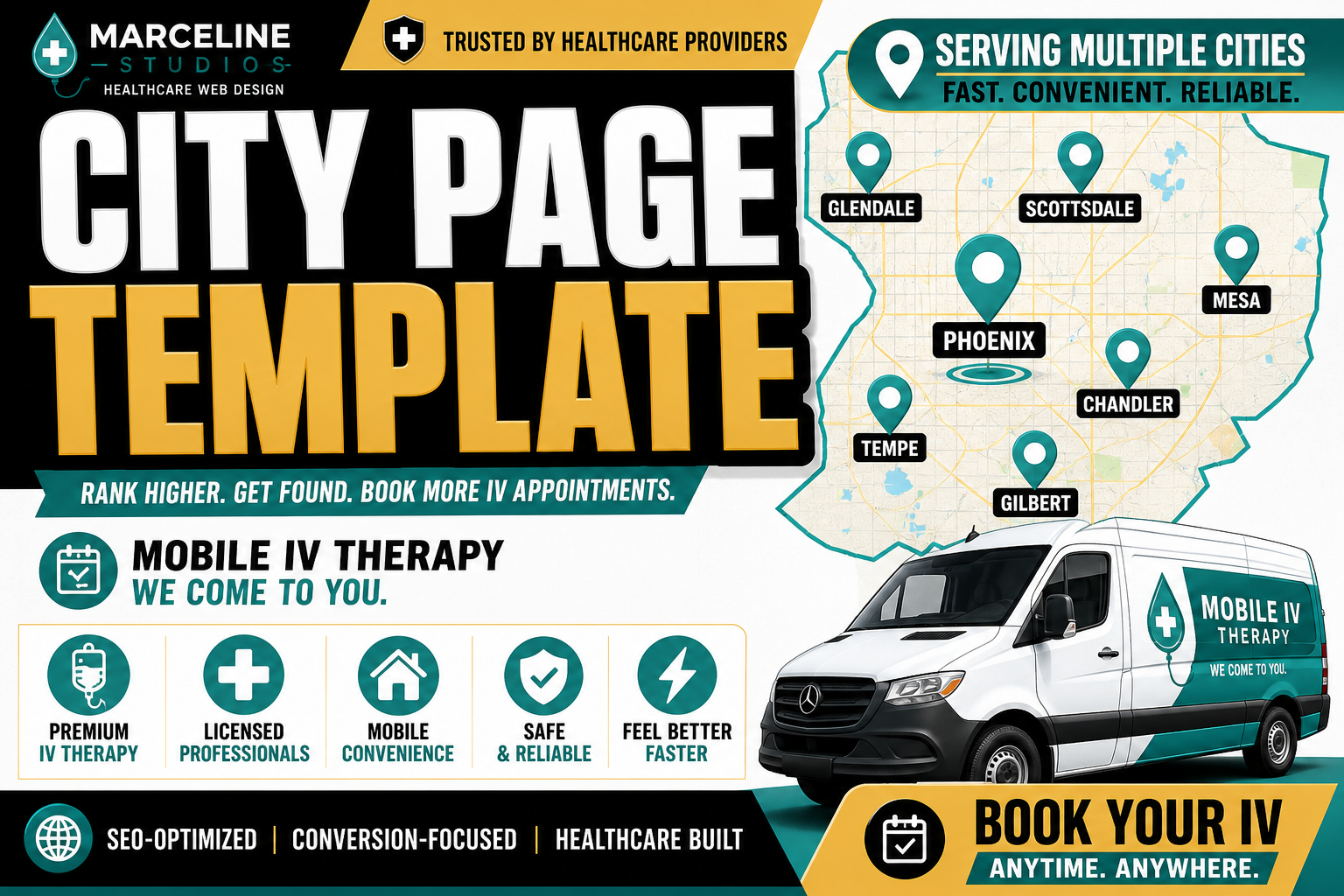
Use it when:
- you serve multiple cities/suburbs
- you offer on‑site/home visits
- patients search “mobile IV near me” or “IV drip at home [city]”
2) The service‑area page template (copy this)
Above the fold
- H1: “Mobile IV Therapy in [City] — Book an At‑Home Drip”
- 1‑sentence offer + who it’s for
- Primary CTA: “Book now” / “Request appointment”
- Proof near CTA (testimonial, outcomes framing, trust badges)
Service area coverage (without spam)
- 6–12 neighborhoods/suburbs as a simple list
- map embed optional (don’t rely on it for SEO)
What you offer
- Drip menu highlights (NAD+, hydration, immunity, athletic recovery)
- Safety framing + transparency (no medical advice)
What to expect
- time, travel window, screening/consult flow
FAQs
- “How fast can you arrive?”
- “Do you serve my area?”
- “What’s included in a mobile IV visit?”
Internal links (intent architecture)
- Link to your main service page as the core hire-us path:
- Link to 1 supporting post for context:
3) Booking UX rules for mobile IV
- one primary CTA (don’t split attention)
- mobile-first steps (60 seconds)
- proof immediately adjacent to the booking action
Want mobile IV pages built for rankings + bookings?
Start here: IV Therapy Web Design or book a free strategy call.
Doorway-page risk checklist (service-area pages)
If you remove the city name and the page still sounds like it could be any city, it’s too generic.
To stay safe:
- Include a real “local layer” (coverage notes, neighborhoods served, scheduling notes)
- Make FAQs specific to that area (not copy-paste)
- Link the page to your core service page and one supporting post
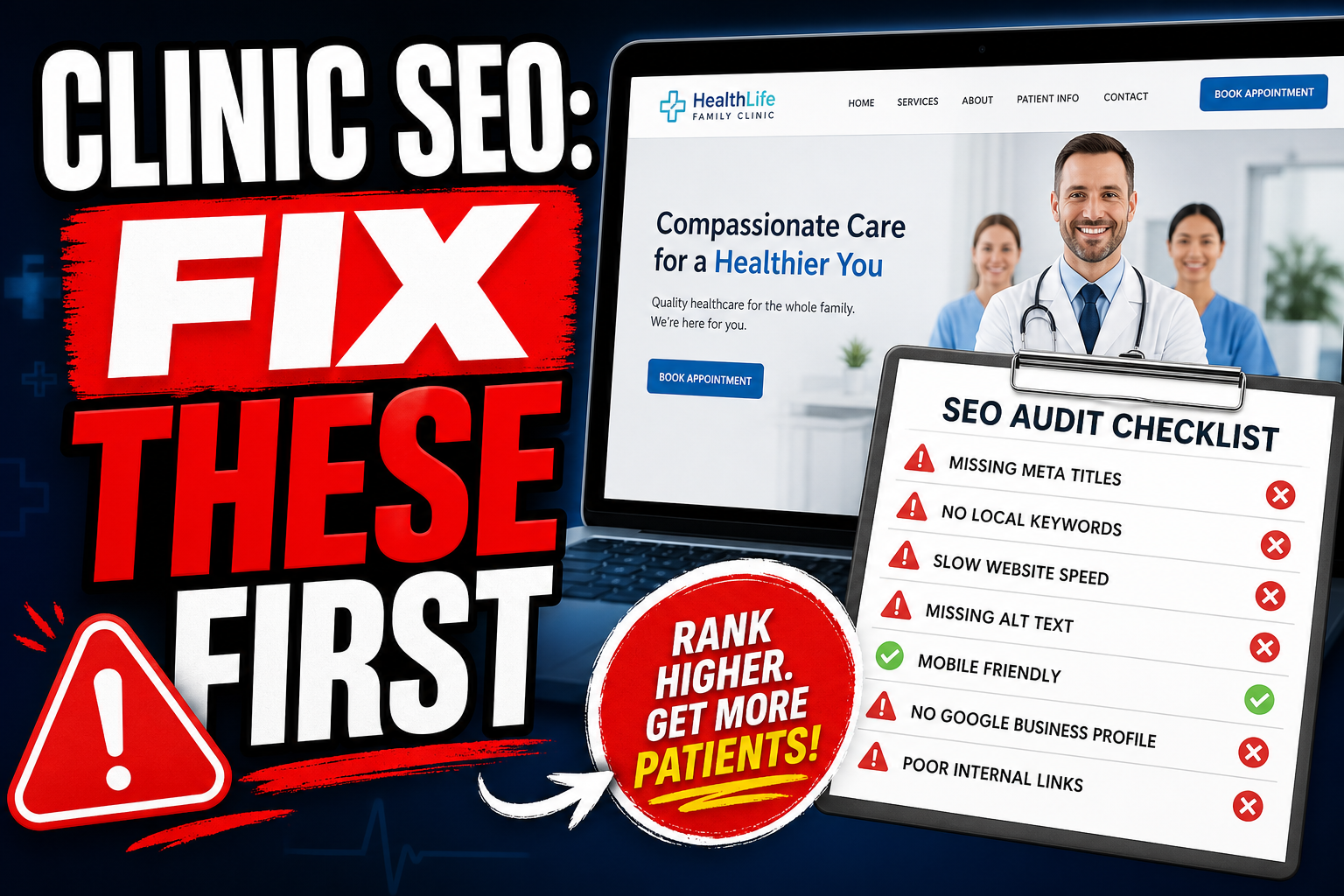
Supporting: Clinic SEO checklist.
Frequently asked questions
Usually yes—if you serve multiple cities/areas. City/service-area pages match local intent and outperform one generic statewide page.
A clear offer, proof near the CTA, coverage details, what-to-expect section, FAQs, and a booking flow that’s frictionless on mobile.