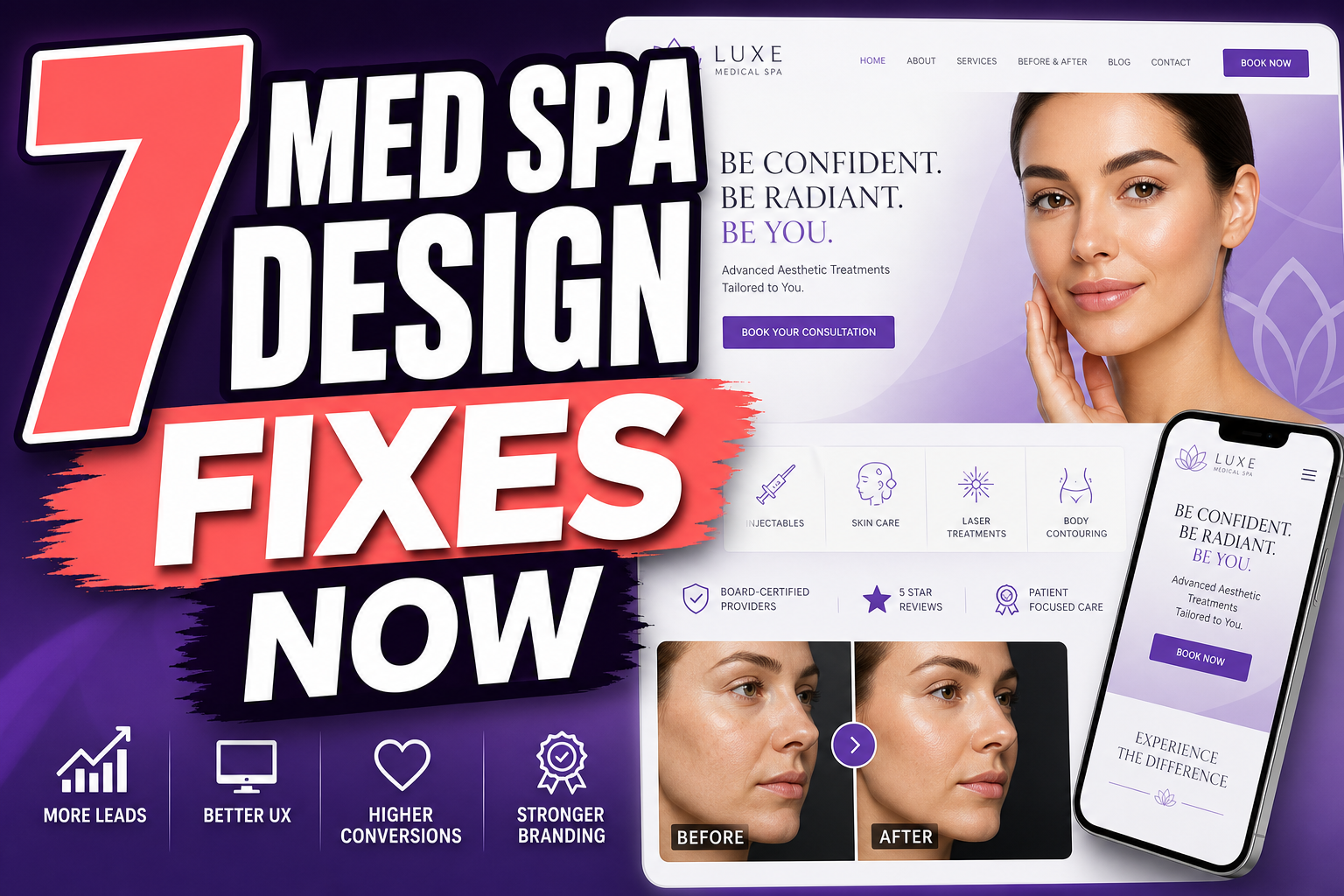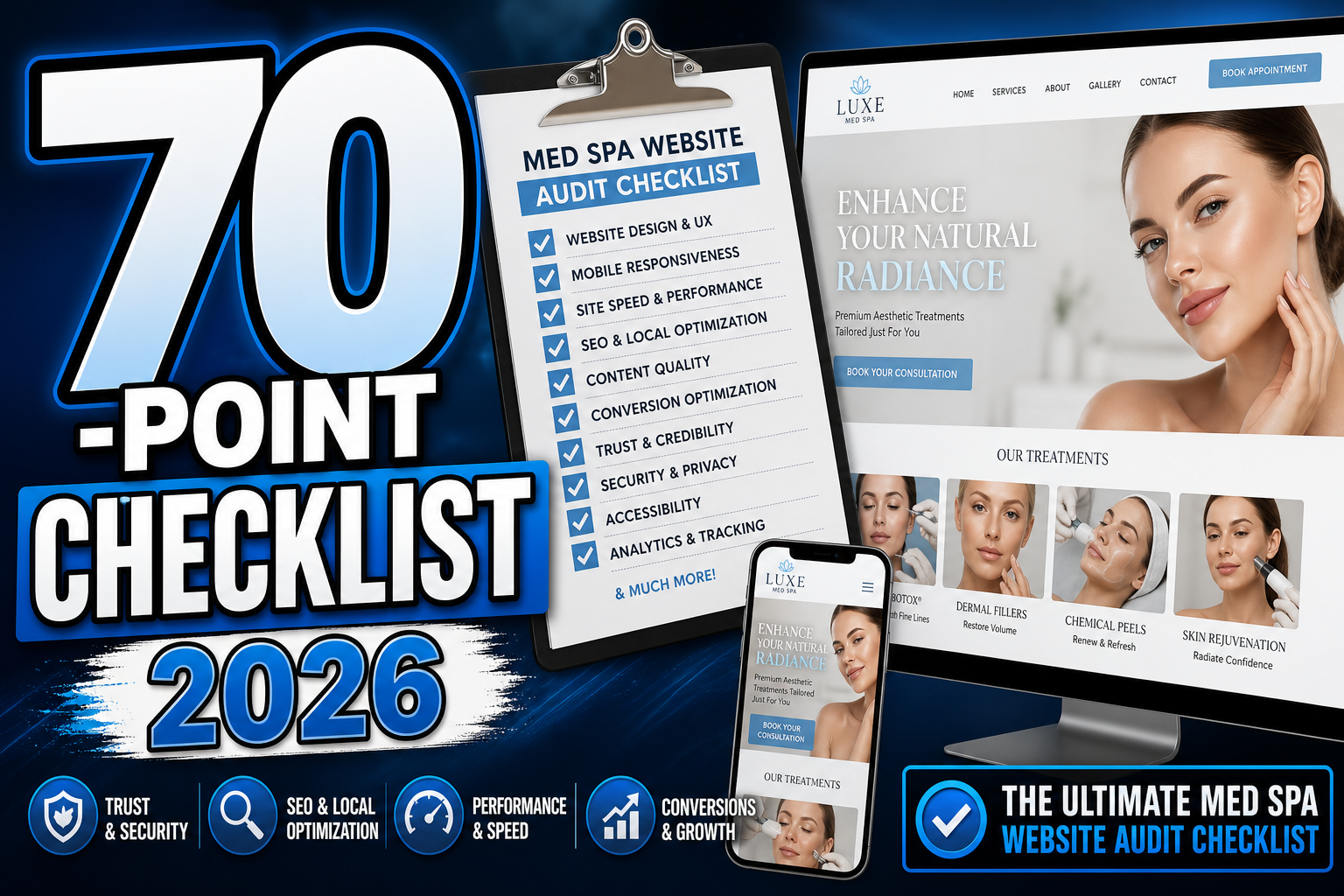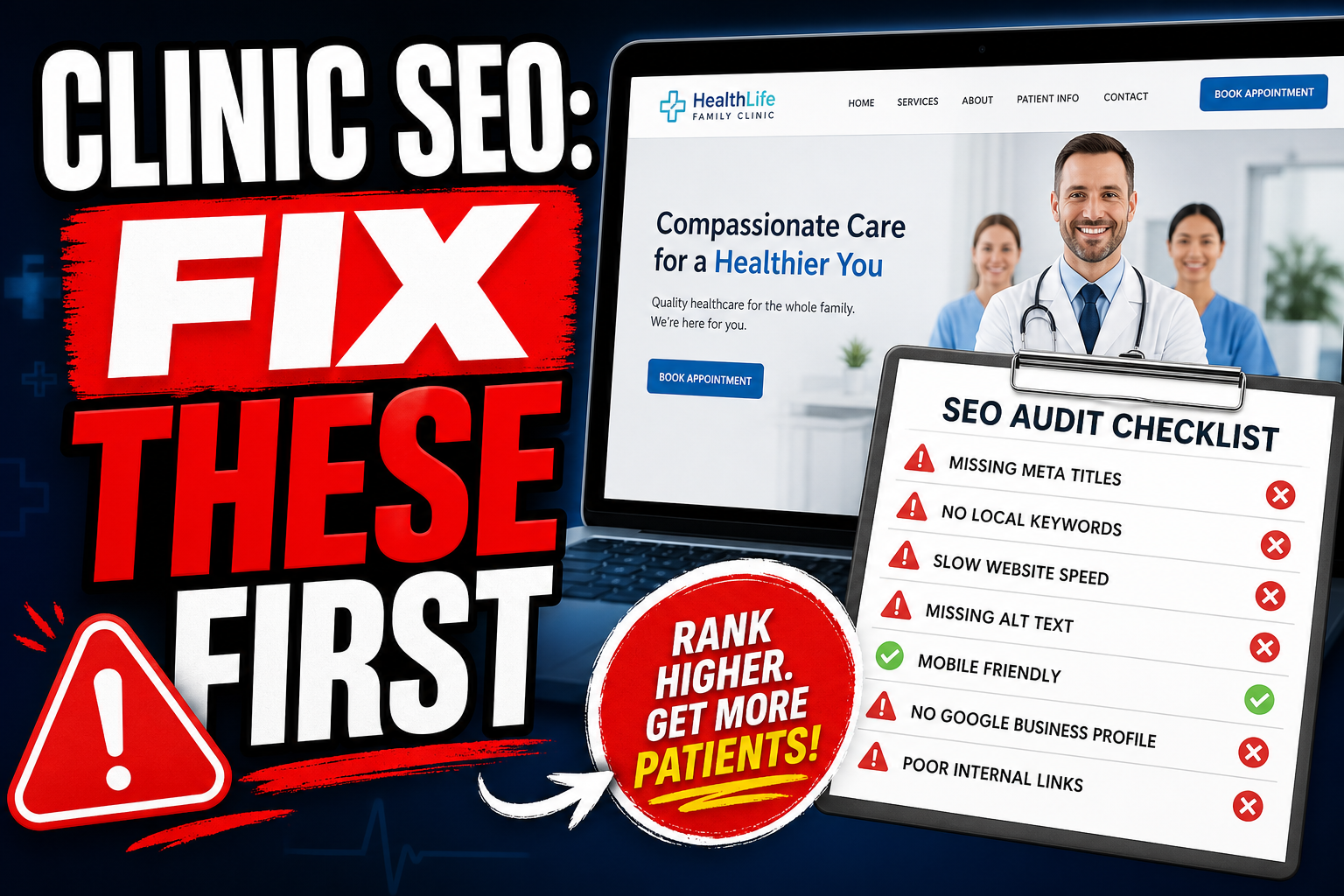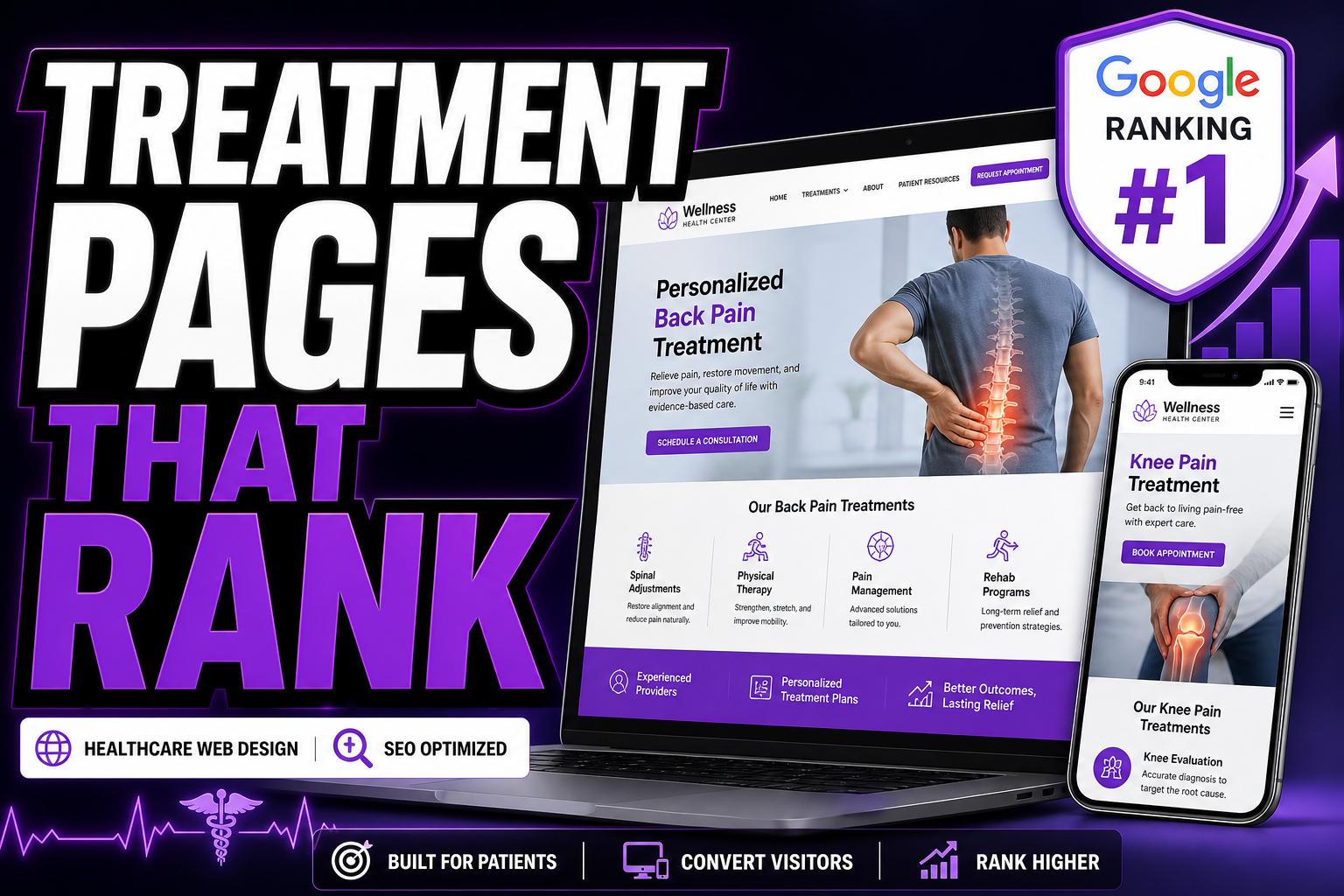
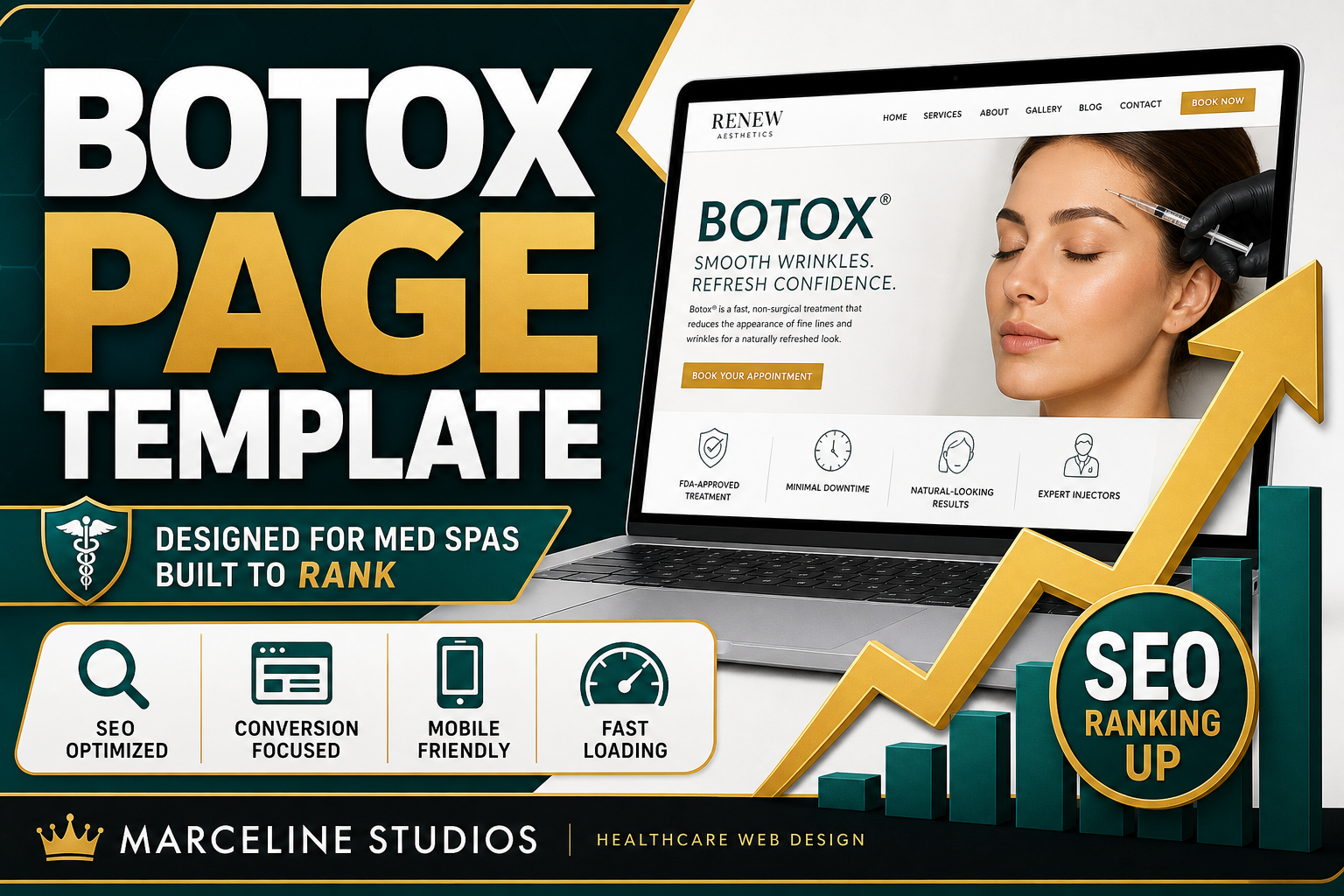
Quick answer: Treatment pages rank when they match search intent and reduce doubt. In 2026, the winning template is: (1) clear outcome headline, (2) proof near the CTA, (3) local relevance, (4) FAQs that answer objections, and (5) internal links that make the money page the “hire-us” path.
This is the structure we use for high-intent services like Botox, fillers, laser hair removal, microneedling, IV therapy drips, and more.
The 2026 treatment page template (copy this)
1) Above the fold
- One-sentence offer: “Botox in [City] — natural results in 10 minutes”
- Primary CTA: “Book a consultation”
- Proof: reviews, before/after, credentials (whichever is appropriate)
2) Who it’s for (intent match)
- Bullet list of symptoms/goals (wrinkles, jaw tension, etc.)
- Ideal candidates (high-level, no medical advice)
3) What to expect
- Session length
- Downtime
- Results timeline
4) Pricing guidance (ranges)
- Ranges build trust. You can add “starts at” or “most patients pay”.
5) FAQs (objections + local intent)
- “How long does it last?”
- “Is it painful?”
- “How many units do I need?”
- “Botox near me in [City]—what should I look for?”
6) Internal links (cluster wiring)
- Link to the main service page as the hire-us path:
- Med spa treatment pages → Med Spa Web Design service
- SEO-heavy pages → Healthcare SEO service
- Link to one supporting post for deeper education (example: Med Spa Website Checklist)
Example outline: Botox page
- H1: “Botox in [City]: Natural Results, Fast Booking”
- Proof strip
- “Who it’s for”
- “Before & after”
- “What to expect”
- FAQs
- Booking CTA
Want your treatment pages built the right way?
If you want a site architecture that ranks and books consults, start here: Med Spa Web Design or book a free strategy call.
“Why click?” hooks you should add (CTR + AI)
To improve CTR and AI citations, make each treatment page include:
- A 40–80 word direct answer near the top (like a mini “Quick answer”)
- A short “what to expect” section with timelines in plain language
- 3–6 FAQs that match how patients actually ask the question
Example: Laser hair removal page mini-FAQ set
- “How many sessions do most people need?”
- “Is there downtime?”
- “Is it safe for my skin type?”
- “What does it cost in [City]?”
Then link back to your money page for the hire-us path:
Frequently asked questions
Yes—if you want SEO traffic that converts. Separate pages match the exact query patients search for and outperform a single generic services page.
A clear above-the-fold offer, proof near the CTA, expectations, pricing guidance, and FAQs that answer objections—plus a fast booking flow on mobile.