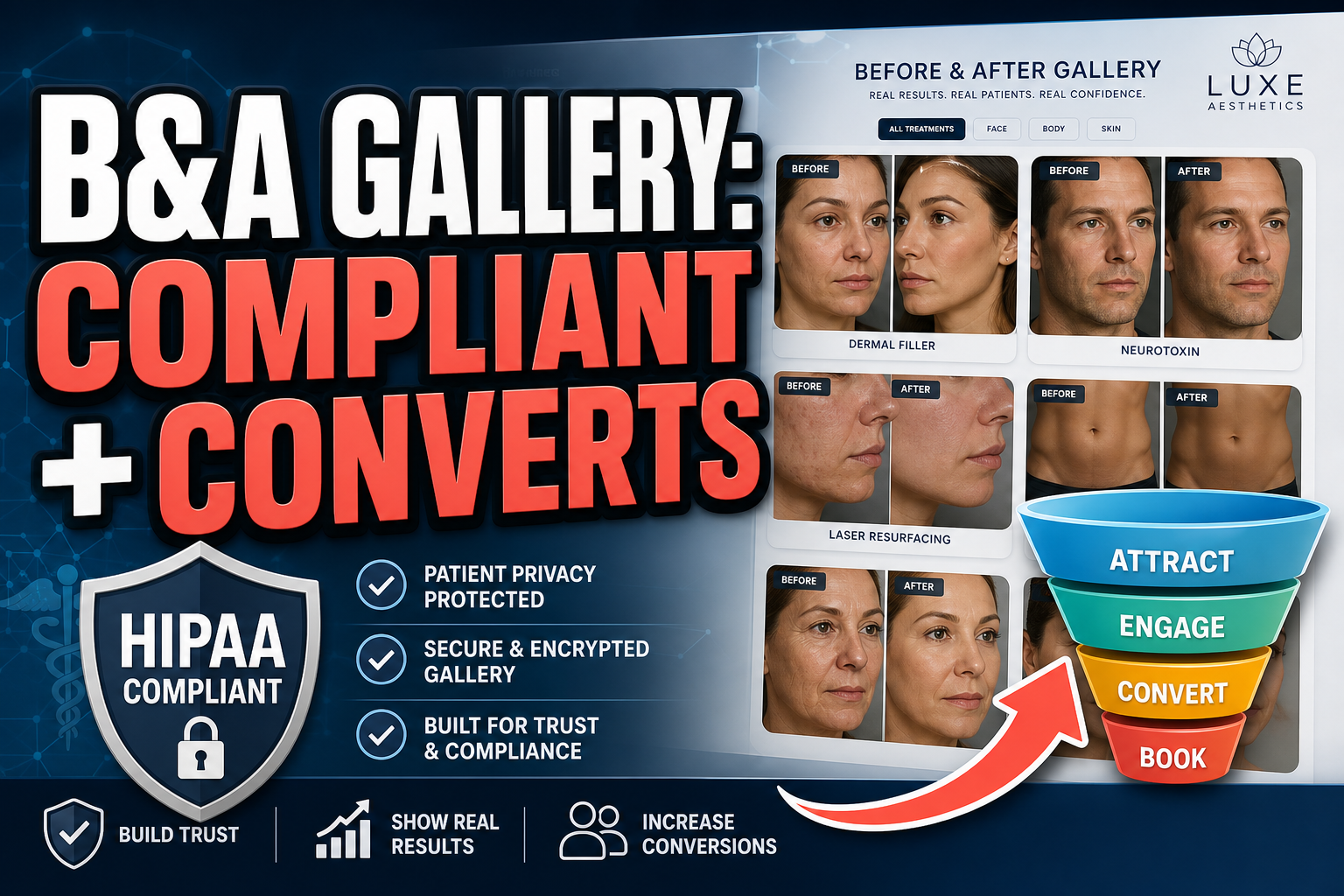
Quick answer: Before-and-after galleries convert when they’re credible and contextual. In 2026, the safe high-performing pattern is: clear consent, realistic expectations, conservative language (no guarantees), and proof placed next to booking CTAs—not hidden on a random gallery page.
This is general marketing guidance, not legal advice.
1) Consent + documentation requirements (minimum)
- Written consent to use images for marketing
- Remove identifying details when appropriate
- Keep a record of what was approved (which images, where used)
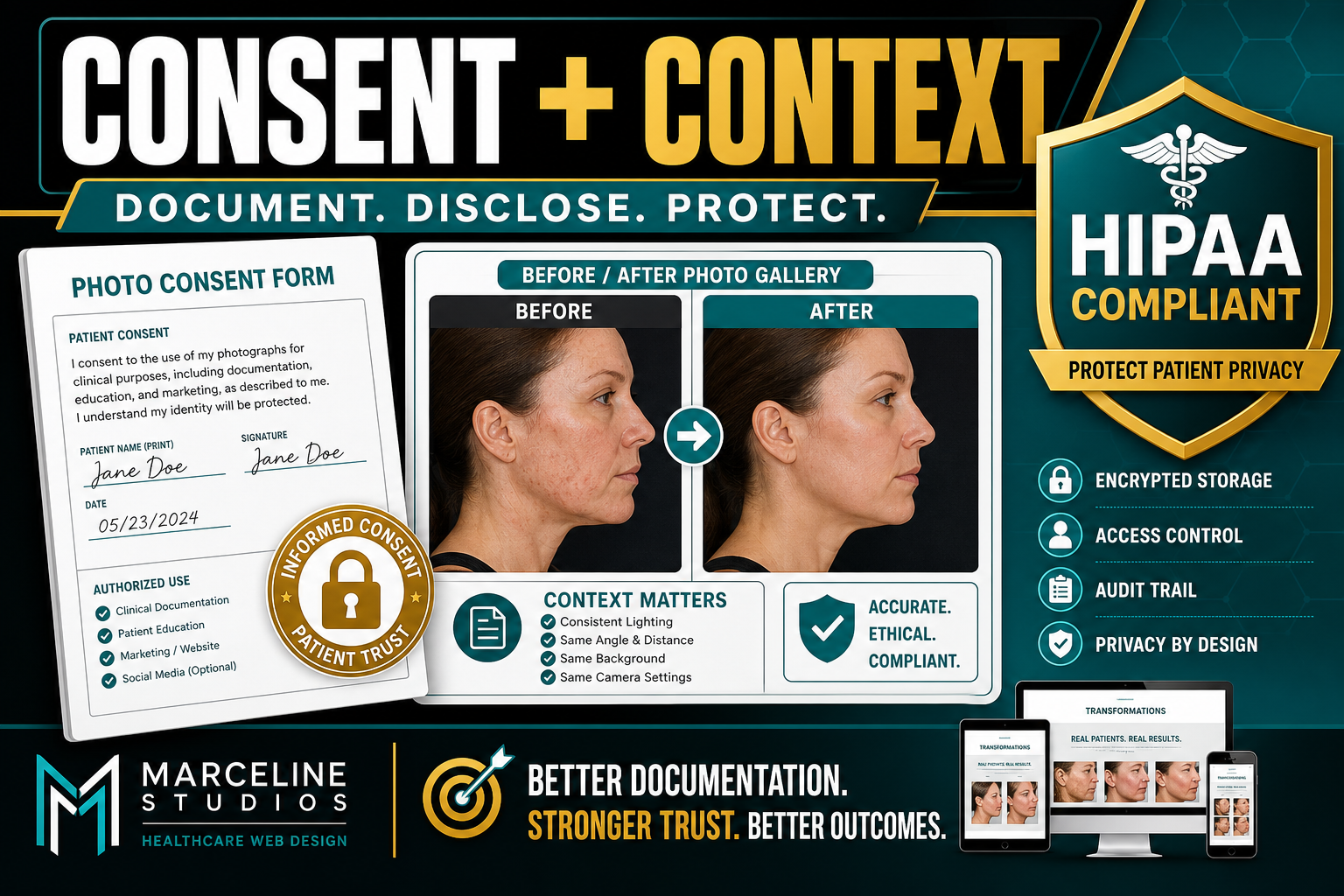
2) Context makes proof believable (and safer)
For each case, include:
- treatment name (high-level)
- time window (e.g., “results shown after X weeks”)
- number of sessions (if applicable) without promising identical outcomes
- a simple disclaimer: “Results vary”
3) Where to place before/after for maximum bookings
Highest ROI placements:
- above the fold on key treatment pages (in a small strip)
- directly above the primary booking CTA
- inside a “proof” section with reviews/credentials
Lower ROI:
- a standalone gallery page with no CTA path
4) Copy rules (what to avoid)
- Avoid “guaranteed”, “permanent”, “cure”
- Avoid medical claims
- Prefer probability language and patient-first framing
5) The gallery UX that sells (mobile-first)
- Tap-to-expand
- consistent lighting/angles where possible
- captions that reduce doubt (“what to expect”)
- clear booking CTA nearby
Want us to implement a conversion-safe gallery system?
Start with: Med Spa Web Design, Healthcare SEO, or book a free strategy call.
Frequently asked questions
On the relevant treatment pages and near the booking CTA. A separate gallery page is fine, but it shouldn’t be the only place proof exists.
A simple, visible statement like “Results vary. This content is informational and does not replace medical advice.” Keep language conservative.