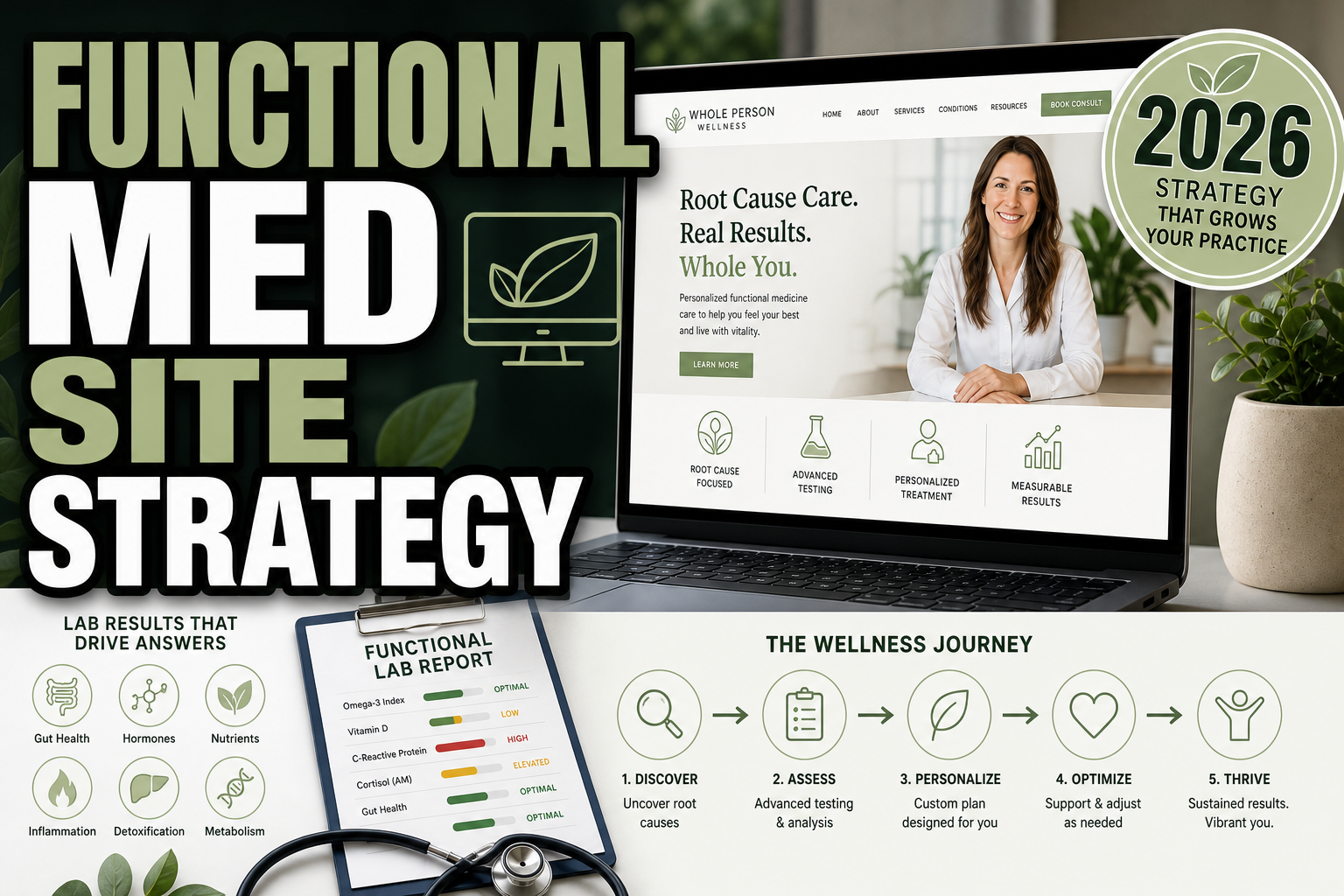
Quick answer: Functional medicine websites convert in 2026 when they combine education that answers high-intent questions with proof and process clarity near the booking CTA. Most prospects won’t book from a generic “services” page—they need to understand your approach, who it’s for, and what happens next.
1) The page architecture that works
Minimum:
- Home (clear positioning + outcome)
- About (faces, credentials, story)
- Approach/Process (how you work, what happens first)
- Conditions / goals you help with (informational, conservative)
- Services / programs (clear offers, no hype)
- Pricing guidance (ranges are okay)
- Booking/contact
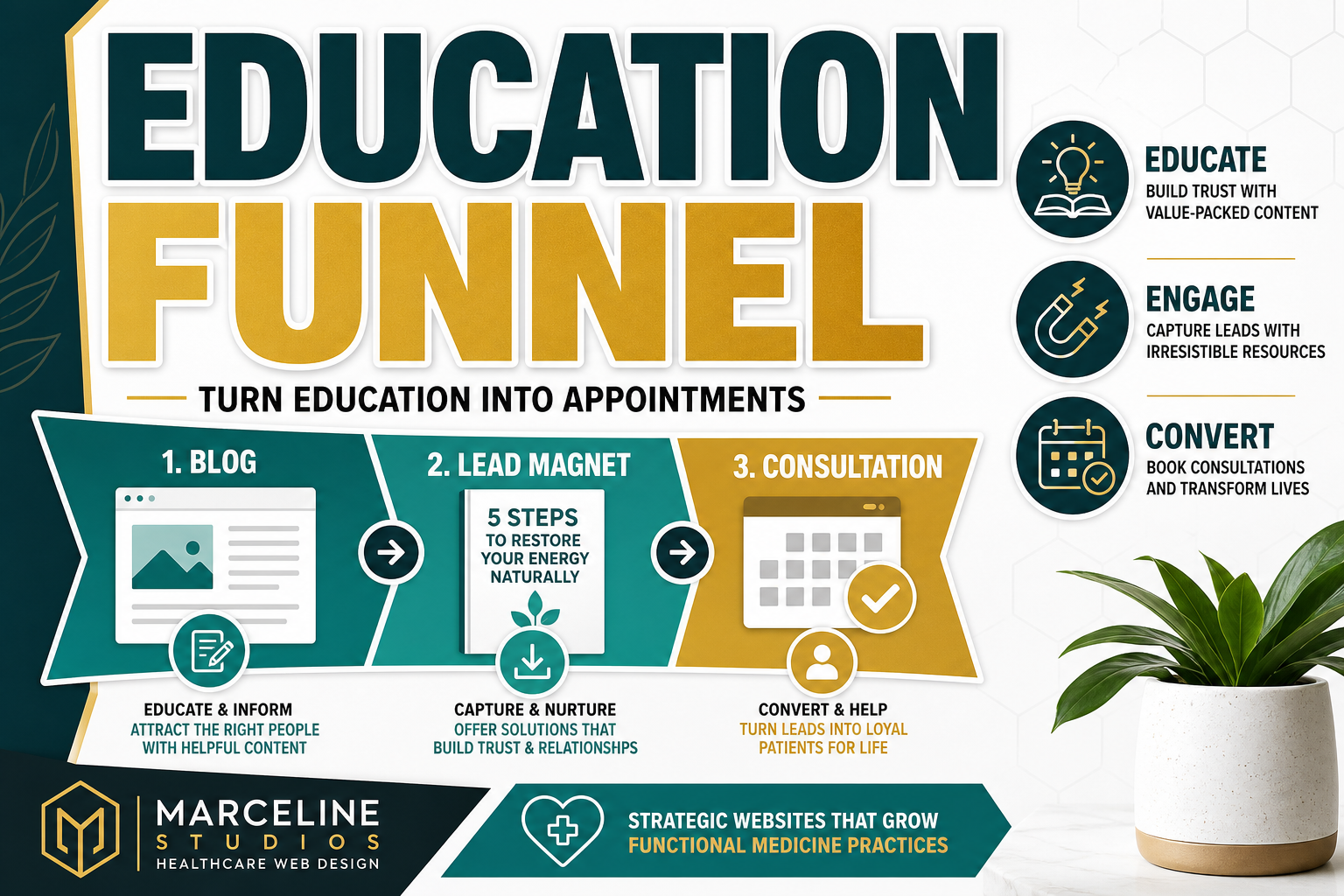
2) Education content that drives consults
Write for “research mode” queries:
- “functional medicine doctor for fatigue”
- “gut health protocol what to expect”
- “functional medicine labs cost”
Each education page should:
- lead with a direct answer (40–80 words)
- include a “what happens next” section
- link back to the hire-us path (your service page)
3) Proof stack (trust > persuasion)
Near CTAs:
- testimonials (conservative framing)
- credentials and clinician identity
- case study link (if available)
- clear process steps
4) Booking UX (reduce friction)
- one primary CTA
- booking in under 60 seconds on mobile
- don’t hide booking behind long multi-step forms before trust is earned
Want this structure shipped for your practice?
Start with Med Spa Web Design for the site architecture patterns, or book a free strategy call and we’ll map your functional medicine funnel.
Frequently asked questions
Often yes, but keep them informational and conservative. Condition pages help match research intent and can lead visitors into a consult when paired with proof and process clarity.
Asking for commitment too early. Prospects need education + proof first, then a simple next step (consult or screening) with low friction.