Quick answer: An IV drip menu page sells when it’s organized around outcomes and intent (energy, immunity, recovery), not ingredient lists. In 2026, winning pages use bundles, clear add-ons, membership framing, and a fast booking CTA—plus trust signals that reduce hesitation.
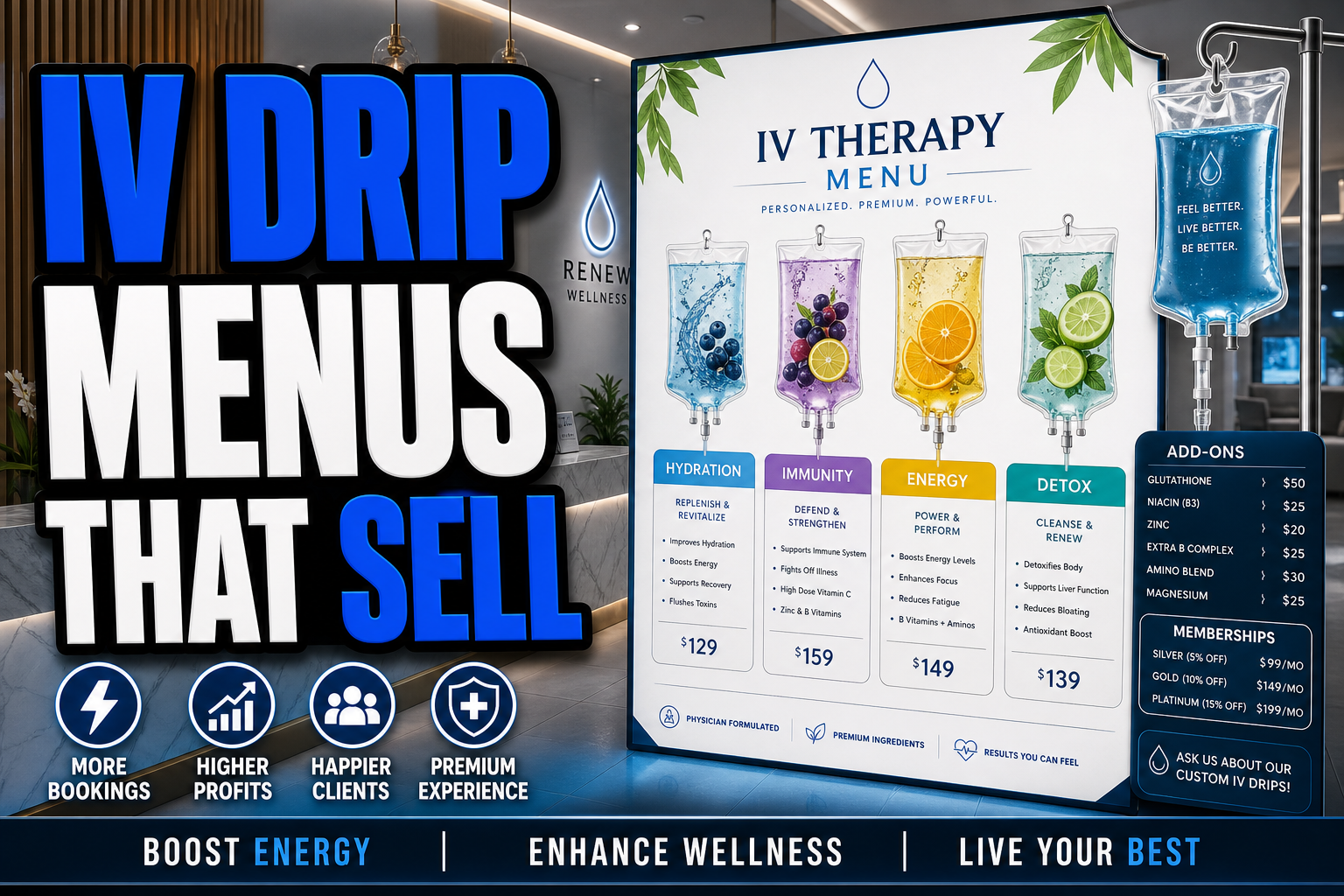
Instead of “Cocktail A/B/C”, group by intent:
- Energy & focus
- Immunity & wellness
- Recovery & athletic performance
- Hydration & travel
Then create individual drip pages for SEO (NAD+, hydration, immunity).
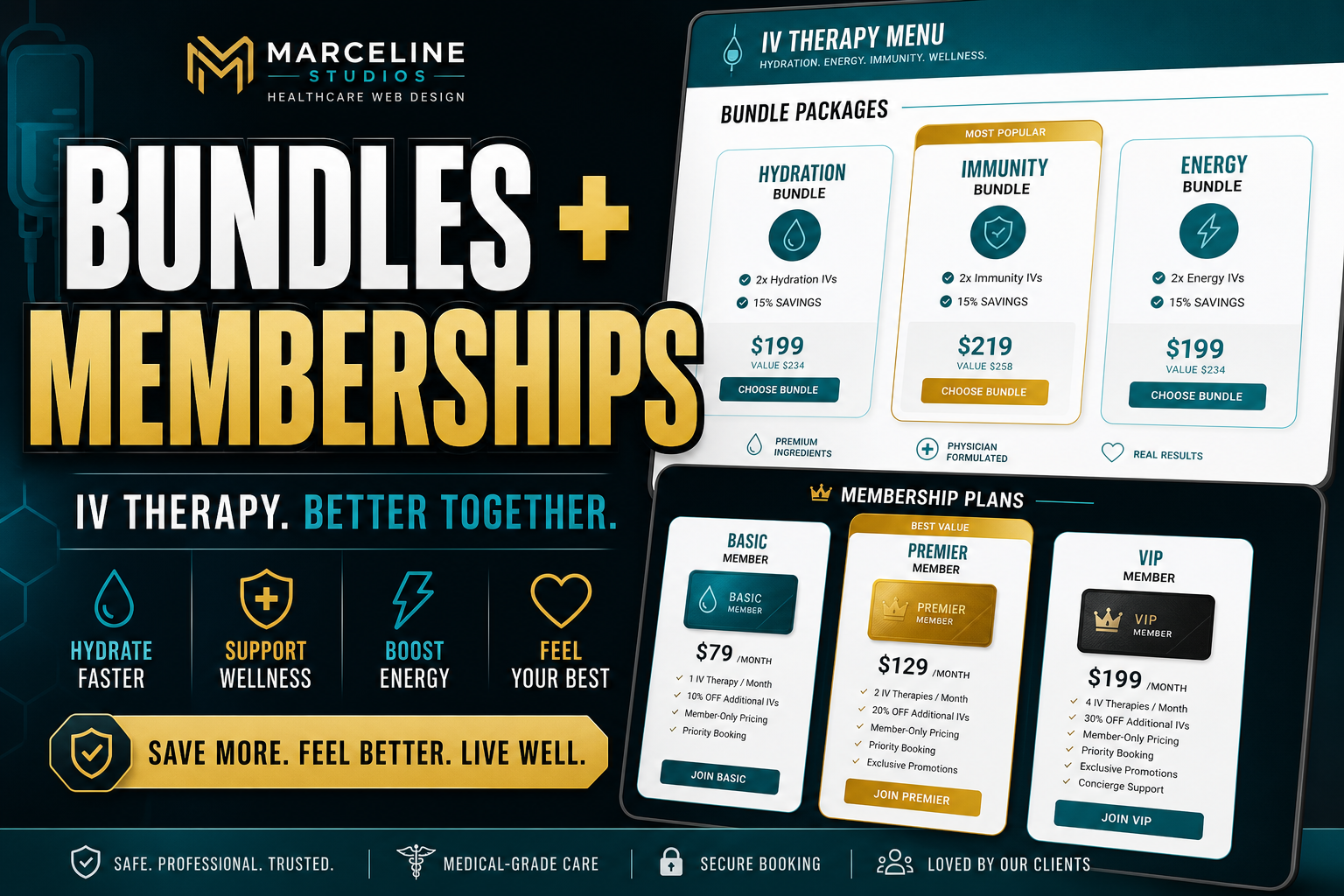
2) Bundles that don’t feel salesy
Use simple bundles:
- “Recovery bundle (3 visits)”
- “Monthly wellness membership”
Explain who it’s for and what changes (high-level, no medical advice).
3) Add-ons: the clean way
Rules:
- 3–6 add-ons max
- show “most popular” (if true)
- keep pricing clear
- place add-ons at booking step or just above CTA
4) Proof blocks that improve AOV
Near the CTA:
- reviews/testimonials
- “what to expect” in 3 bullets
- transparent pricing ranges
5) Booking UX (mobile-first)
- one primary CTA
- under 60 seconds on mobile
- repeat CTA after menu sections
Start with: IV Therapy Web Design or book a free strategy call.
Frequently asked questions
Keep it high-level. Patients need clarity and trust more than a dense ingredient wall. Detailed info can live on individual drip pages if needed.
Use bundles and memberships with clear intent-based categories, add-ons placed near booking, and proof near the CTA to reduce hesitation.