Quick answer: Ketamine clinic copy converts when it answers 3 questions fast: Is this safe? Is this for me? What happens next? In 2026, the winning pattern is conservative, process-first language with proof near the CTA—no guarantees, no “miracle” framing, and no medical advice.
This is marketing guidance, not medical advice.
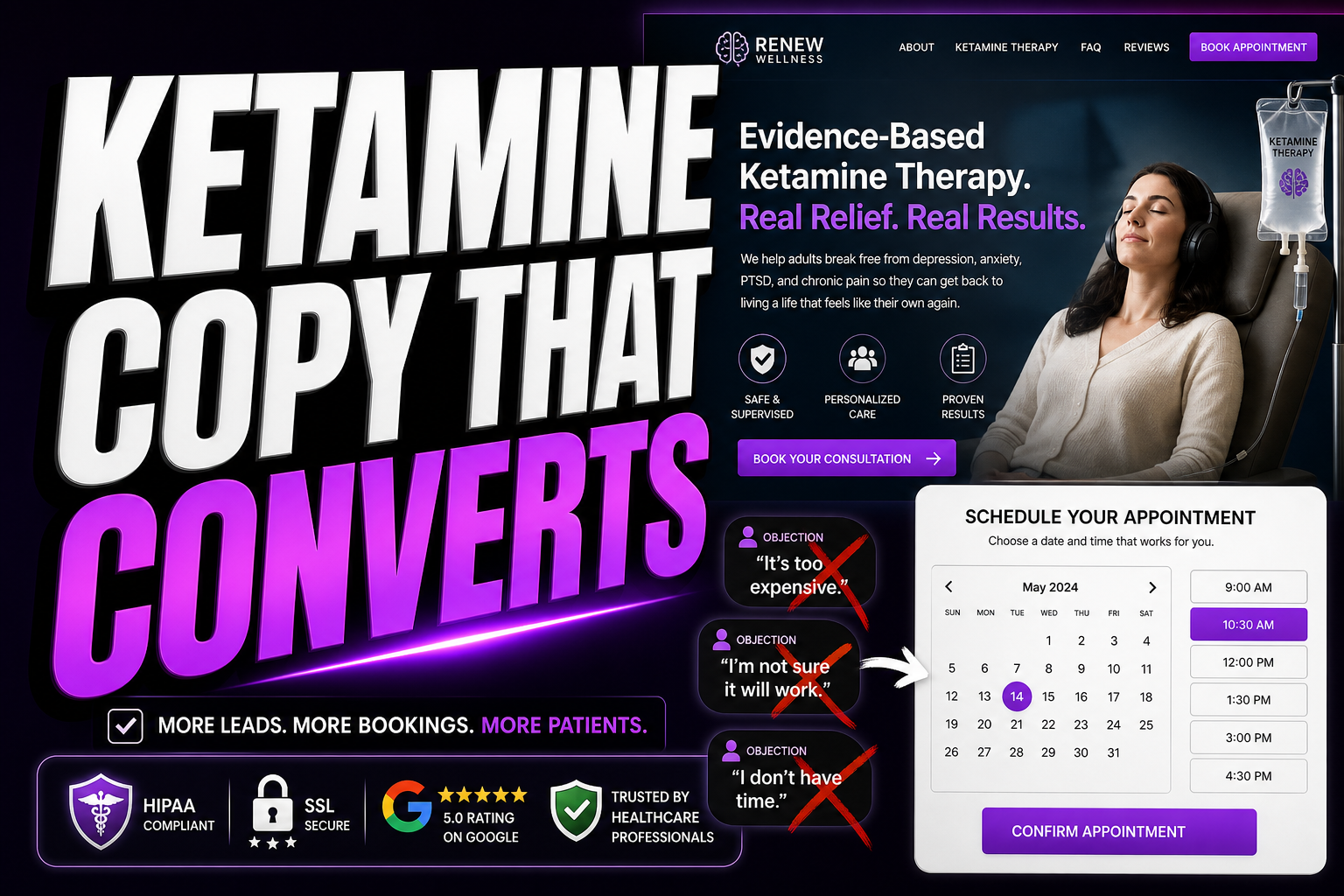
1) The top objections patients have (and what to say)
“Is it safe?”
Copy blocks:
- screening-first approach
- clinician oversight (when applicable)
- clear “what to expect” steps
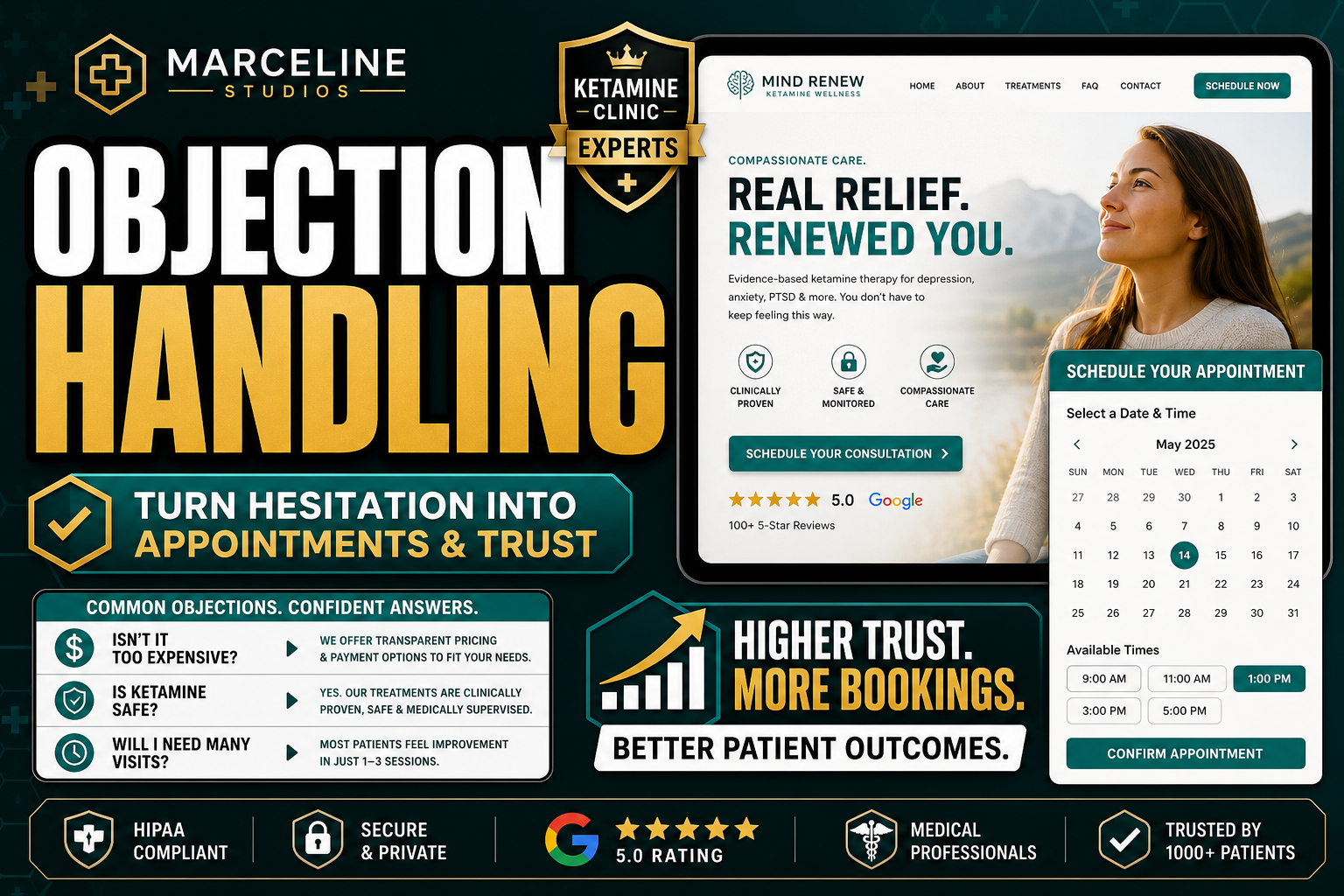
“Will it work for me?”
Avoid guarantees. Use:
- “may help” language
- emphasize individualized clinician evaluation
- focus on process + support rather than outcomes
“I’m worried about the experience”
Use:
- environment description (calm, private)
- support presence
- aftercare and follow-up language
2) Trust signals that increase consult requests
Place near CTA:
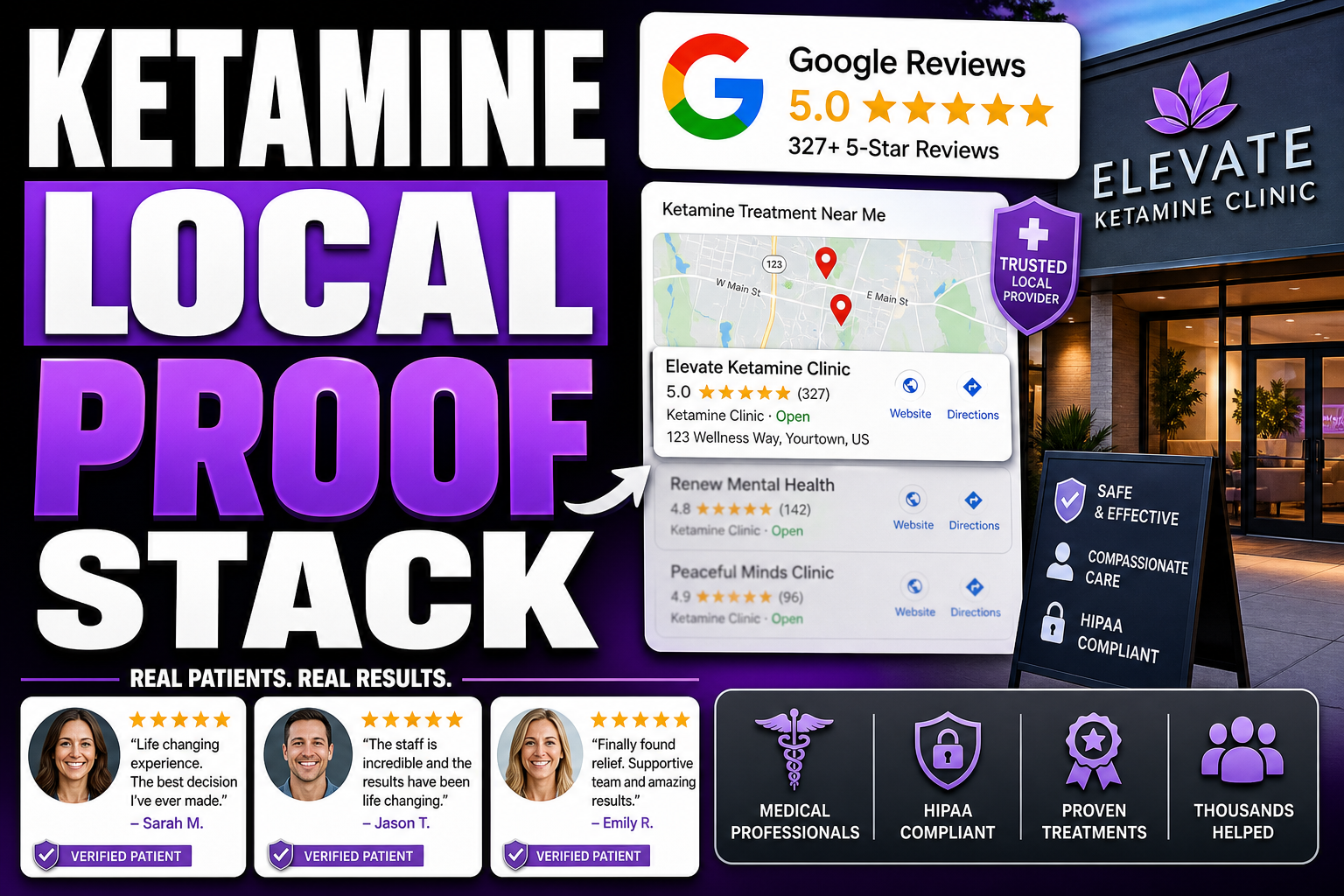
- conservative testimonials
- clinic identity + faces
- credentials/medical director (if applicable)
- process clarity (timeline + next steps)
3) Scheduling copy that reduces drop-off
Replace “Book now” with:
- “Request a consultation”
- “Start with a screening call”
- “Talk to our team (15 minutes)”
Then show steps:
- 1short screening
- 2consult
- 3next steps
4) CTA patterns that work on YMYL pages
- one primary CTA
- repeat CTA after FAQs and “what to expect”
- keep forms short; ask more after trust is earned
Want this implemented on your ketamine clinic site?
Start here: Ketamine clinic website requirements, our Ketamine Clinic Web Design service, or book a free strategy call.
Frequently asked questions
Use process-first CTAs like “Request a consultation” or “Start with a screening call.” They reduce fear and feel safer than “Buy now” style language.
Yes, but keep them conservative and avoid medical claims. Pair testimonials with process clarity and a clear next step.